
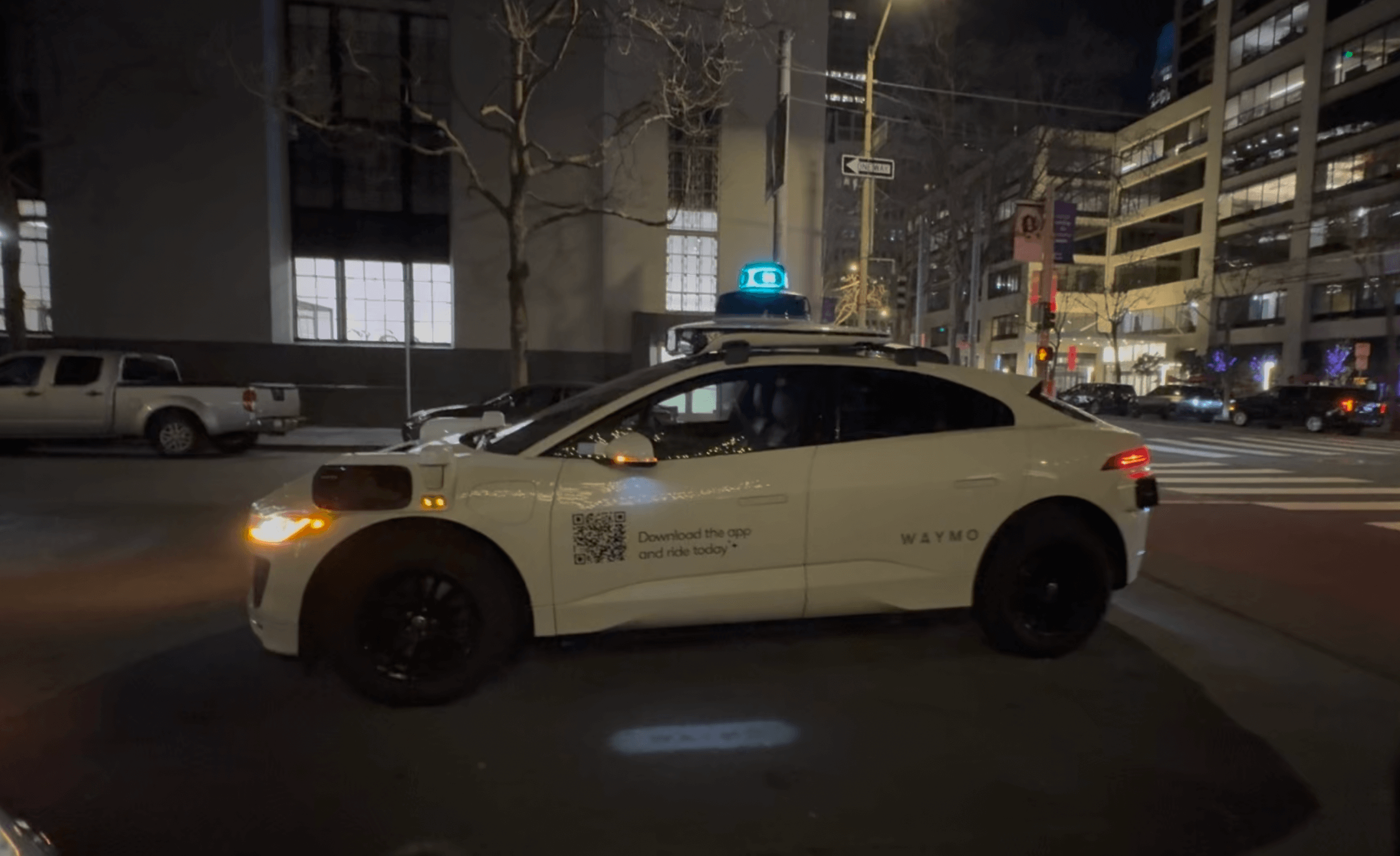
This WAYMO sat outside Boulevard Restaurant in San Francisco for 20mins on Feb 5, 2026. Photo by Marc Phillips
Meanwhile, Waymo is reportedly approaching a $110 billion valuation after raising $16 billion in fresh capital, according to the Financial Times. Investors including Sequoia Capital, Dragoneer Investment Group and DST Global are backing its rapid expansion across the United States and into international markets.
At the same time, Tesla is accelerating its own robotaxi ambitions. From a financial and technological standpoint, autonomous vehicles represent significant progress. However, an important social dimension of transportation is being overlooked.
1. Transportation Has Always Been Social
Human beings are wired to exchange stories, share information and connect with strangers. A taxi ride has historically been more than simple transportation. It has provided a small but meaningful opportunity for human interaction.
Passengers often ask drivers about local restaurants, neighbourhood changes or traffic conditions. Drivers frequently share insights, experiences and observations about the city. Even when the conversation is brief, the presence of another person creates acknowledgment and connection.
Autonomous vehicles remove that possibility. When a passenger enters a driverless car, the experience becomes entirely transactional. There is no greeting, no shared moment and no informal exchange. The journey becomes a service delivered by software rather than a shared human experience.
While some riders may appreciate silence, society is already reducing face-to-face interaction through remote work and digital communication. Eliminating drivers removes yet another everyday point of connection.
2. Real-World Conditions Require Human Judgment
Beyond conversation, there is a practical issue that becomes visible in imperfect traffic conditions. Real streets are unpredictable. It may be raining heavily. A vehicle could be broken down near the pickup point. Traffic congestion might block safe access. A passenger may need to cross a busy road and hesitate.
A human driver interprets these situations instinctively. The driver can make eye contact, signal reassurance, reposition the car into a driveway or adjust slightly to make entry safer. These micro-decisions are based on context and judgment, not strict programming.
An autonomous vehicle operates differently. It follows mapped pickup locations and predefined safety protocols. If circumstances change, the system does not improvise in the same way a person can. The absence of a driver means there is no shared visual confirmation or verbal coordination. Minor issues can become prolonged delays simply because there is no human available to interpret nuance.
3. Efficiency Is Not the Same as Progress
Waymo’s valuation reflects investor confidence in autonomy’s economic potential. Reduced labour costs, scalable fleets and consistent performance are compelling arguments. From an operational standpoint, the technology works.
However, progress should not be measured solely by financial returns or engineering milestones. It should also consider how systems shape human behaviour and social experience. When we remove drivers from taxis, we do not simply remove labour. We remove interaction, adaptability and informal communication.
Human beings were built to connect. Even small exchanges reinforce social cohesion. A cab ride has traditionally offered a brief but meaningful arena for that exchange. As autonomous fleets expand, the question is not whether the vehicles can drive safely.
The question is whether eliminating everyday human interactions truly represents advancement, or whether it quietly diminishes something essential.